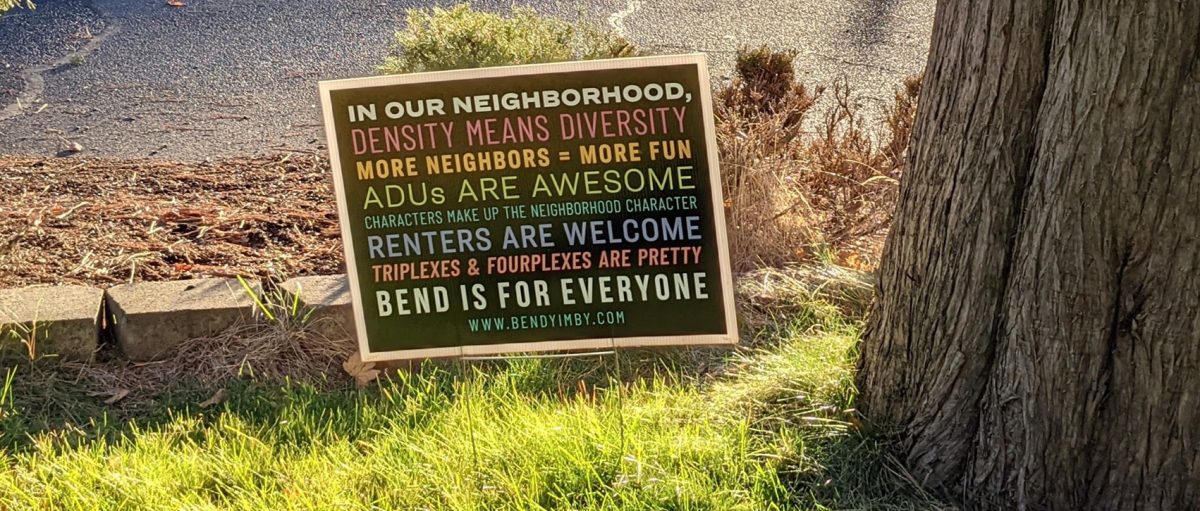
Featured

Welcome to YIMBY!

Bend – if you hadn’t noticed – is in the middle of a housing crisis!

Vacancy rates are really low: even if you have the money to rent a place, it can be difficult finding something that’s open.

And for a lot of people, it can be tough to find a place they can afford, either to rent, or as a first home to purchase. Even if you have a home already, there are good reasons to be concerned about this: could your kids afford to live here if they wanted? How about people like nurses, firefighters, police and teachers, to say nothing of all those who work in jobs that pay even less.

According to a local survey of people experiencing homelessness, economic factors are one of the top reasons people become homeless: the rent is too high for many.

Bend YIMBY is one of many YIMBY – “Yes In My Back Yard” – groups springing up around the country, in places that have housing problems. We are pro-housing, in order to keep prices under control.

What we need is more housing supply to match the demand.  But that doesn’t just mean lots of tract housing on the east side, with cul-de-sacs and arterial roads that no one wants to walk along.  It means more options throughout town. Apartments, townhouses, duplexes, triplexes, and yes, of course, single family homes too.

We used to build a wider variety of options than we do now.  For instance, the O’Kane building (1918) originally had ground floor retail, some office space, and living quarters upstairs.
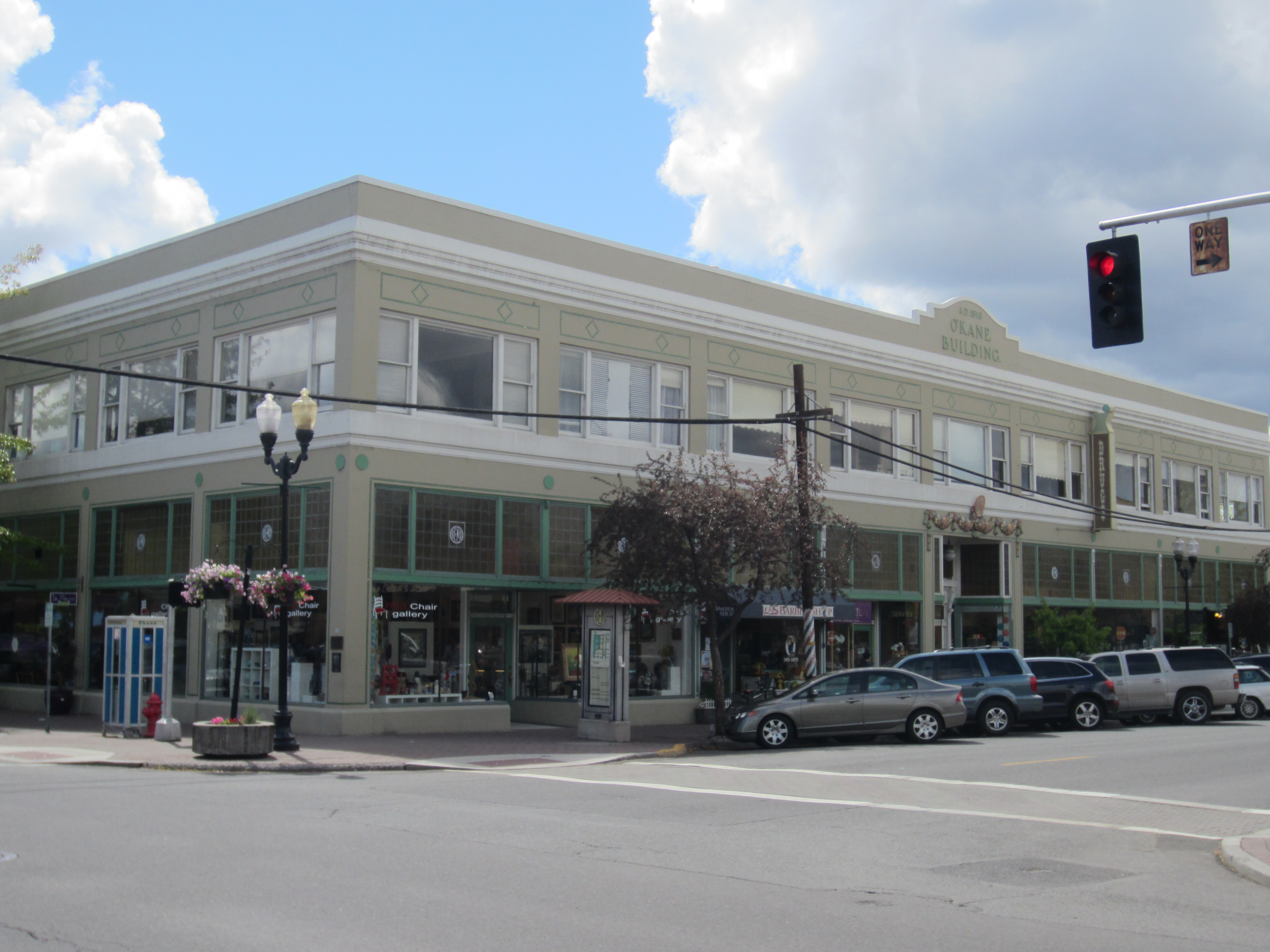
Image result for o'kane building bend oregon

Not far away are the Broadway apartments, also around 100 years old:

What we do:

  • People: we work to elect people who understand the housing abundance agenda.
  • Policies: we work to get policies in place that make it easier to build housing of all shapes and sizes.
  • Projects: we advocate for projects that meet certain criteria and add more dwelling units (aka “homes”) to the supply of housing in Bend.
  • Education: we talk with people about how important housing is. Everyone needs a place to live, and when they struggle to find one, it has impacts on not just them, but the economy, the environment, and our entire community in various ways.

We realize that Bend alone can’t solve the housing crisis, so we are now part of a nationwide YIMBY organization: https://yimbyaction.org/

If you’d like to join us, sign up for our Facebook group: https://www.facebook.com/groups/BendYIMBY or our announcement mailing list.

“Detached Townhomes” come to Bend

Land in Bend is expensive, so to make housing more affordable, home builders need to use it efficiently. You can’t build inexpensively on a large plot.

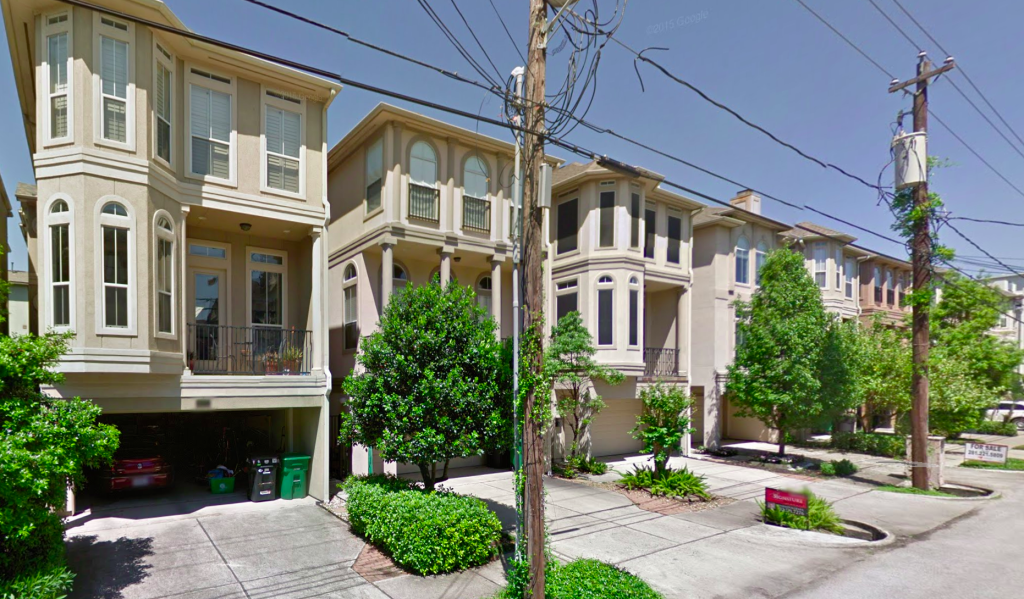
One way other cities have accomplished this is via something called a ‘detached townhome’, row house, or simply stated, an independent, freestanding house on a small lot that uses almost all of the lot’s land. This used to be a common type of home in many cities. Here are some historical and more modern examples

“Painted Ladies” in San Francisco
Detached Townhomes in Houston, Texas

Because these are independent houses that do not share walls, on separate lots, it’s possible for a local home builder to construct them one at a time without financing and planning an entire project with multiple homes. In an era with high financing costs, this means you could build them sequentially, reinvesting the profits from one to build the next, rather than taking out a large, expensive loan, as would be more likely for a larger development with more homes.

Since they do not use much land, that particular cost is lower than a house with a large yard.

The effort to legalize these in Bend was a true team effort:

  • Bend’s city council wanted a few more development code updates related to affordability.
  • YIMBYs in Bend saw that the small lot sizes in Houston and older cities were a great way of producing more affordable infill development.
  • Bend YIMBY Members and local architects Ryan Starr and Katherine Austin spent time working with Bend’s planning department to get the idea in front of them.
  • The planning department researched how these work in other places and created some potential changes in Bend’s development code.
  • The changes were approved unanimously by the planning commission.
  • And lastly, Bend’s city council voted unanimously to approve them!

It was really great to see everyone rowing in the same direction and several good housings option move through relatively quickly. Let’s hope that momentum continues in the future as we keep looking for ways to make it so that everyone who works in Bend can afford to live here!

YIMBYs go to Salem

Well that was an eventful day!

HB 2138 is Governor Kotek’s big housing bill this year, fixing some deficiencies in HB 2001 from a few years back. It’s a “strong support” from us and many other groups.

First off, a big thanks to Corie from COLW (Central Oregon LandWatch) for organizing the trip. She was headed there to speak in favor and reached out to see if anyone else wanted to go. Ian Karasz and I both decided to tag along, and signed up to give testimony at the hearing in the afternoon. This was Bend YIMBY’s first visit to Salem in person.

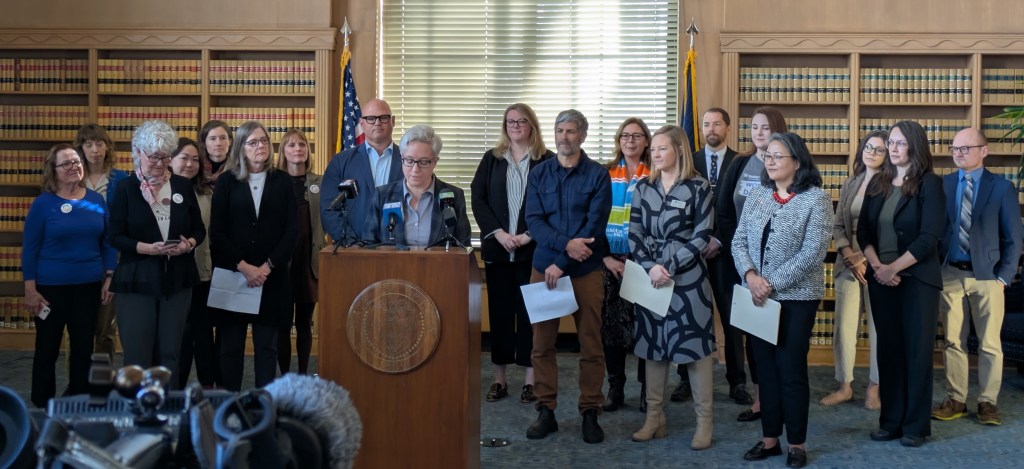
In the morning there was a press conference with governor Kotek and a bunch of people/groups who advocated for and worked on 2138. It’s a pretty diverse group, from environmentalists to the Oregon Home Builders Association

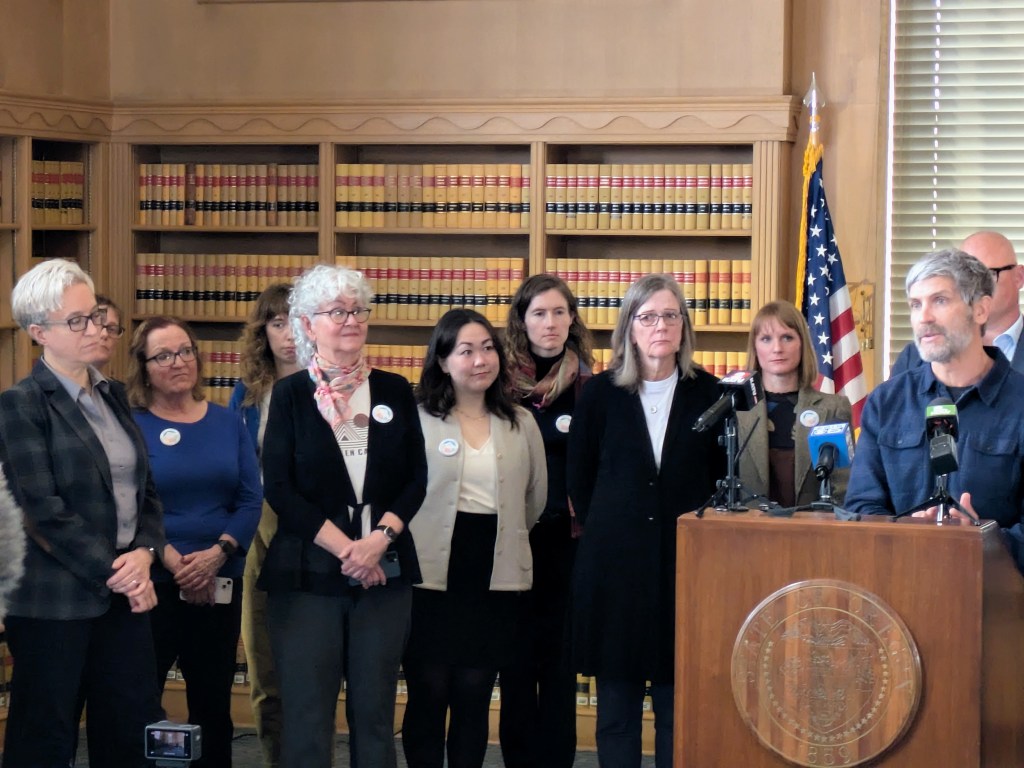
Jesse Russell from Hiatus Homes here in Bend got to say a few words in support:

Unfortunately, we also learned during the press conference that, because of some early pushback, they were pulling some language around historic districts in the bill. The idea isn’t to bulldoze them, but to permit redevelopment of structures that are not individually listed on the national register but just happen to be in the area. That way we get historic preservation, without preventing change in central, desirable portions of our cities.

They didn’t even wait until the hearing to pull that which seemed a bit premature to many advocates who were there.

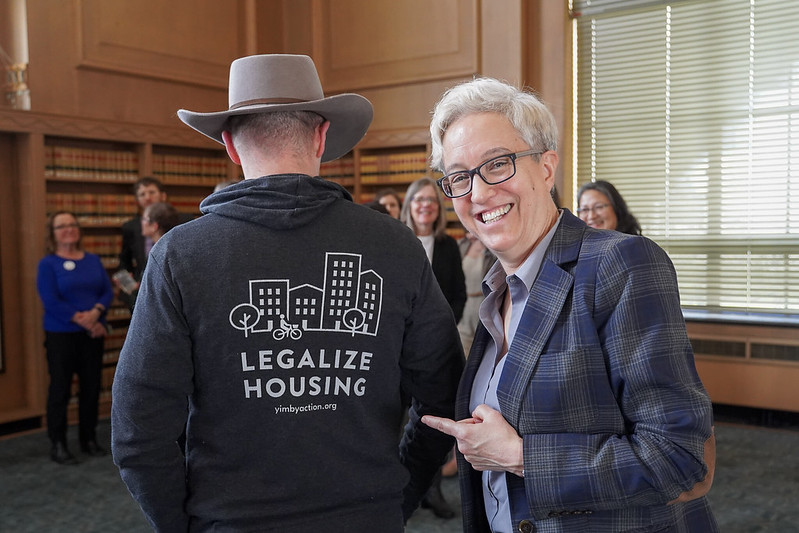
Governor Kotek liked my “Legalize Housing” hoodie from YIMBY Action:

Portland Neighbors Welcome (PNW) bought lunch for everyone (thank you!) and we got to hang out with them a bit before going to the hearing.

The hearing was a bit of a disappointment as there were a number of pro-housing people who could not make the trip to Salem, who wanted to speak in favor via Zoom, but they did not get a chance to speak because the chair cut it short. Their group worked hard to get people lined up to participate in the process and it’ll make it more difficult for them to turn people out in the future.

Corie, Ian and I were all able to speak because we checked the “traveled more than 100 miles” box when we signed up. Ian’s moving stories about his friends’ struggles with housing were the star of the show in my opinion and remind us all, yet again, of why we do what we do as YIMBYs. 

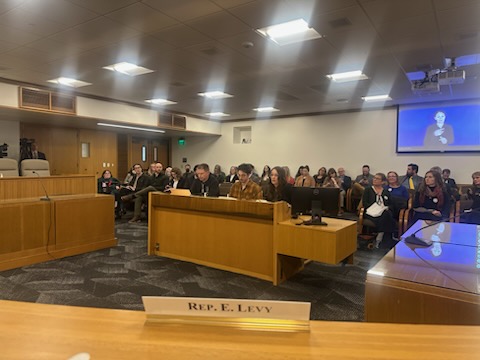
Thank you Representative Levy!

This hearing is just one step along the way and there were no decisions or anything like that, so we’re going to keep pushing for it! 

State-level legislation is a whole new ‘difficulty level’ in terms of tracking it and advocating for it. We’re still trying to figure out the best ways for us, as volunteers, who can’t work on it full time, to follow things and make an impact.

As always, a HUGE thank you to everyone who added their name to our written testimony or sent something in themselves. 

My caption: “Density is good. Both for hair and housing 😂

from https://bsky.app/profile/pnwelcome.bsky.social/post/3ljiygheznk2u )

Julia Shumway, who spent a few years reporting on Bend’s city council, is now a reporter with the Oregon Capital Chronicle. Both Ian’s moving stories of his friends’ struggles with housing and my quote about the people who built Bend made it this coverage:

Really proud of Bend “punching above our weight” in terms of showing up. Governor Kotek also had good things to say about Bend during the press conference. 

Thanks again to Corie for organizing the trip, and Ian for his moving comments during the hearing and both of them for  making the long road trip much more fun.

Bend YIMBY 2025 Budget

A lot of people are curious about who we are. Our chapter leads are here: https://bendyimby.com/about/ and we’re very clear that we’re a pro-housing and urbanism group.

In the interests of further transparency, we thought we’d share our budget for 2025:


Chapter Budget

Current Funds Available: $415

  • Baseline Funds: $300
  • Membership Bonus: $115
  • Additional Fundraising: $0

Expenses to Date: $0


That’s right. Our 2025 budget is a grand total of $415, although we might get a bit more as the year goes on. We can also get some free supplies like stickers and clipboards.

We are a people-powered group!

That’s right. We do what we do thanks to volunteers. We don’t have paid staff, and our accomplishments are done with very little financial support. There’s nothing wrong with other kinds of groups that require money. Things like providing food to those in need require funding from generous donors.

But that’s not how our group operates. Bend YIMBY is a committed group of volunteers who want everyone who works in Bend to be able to afford a place to live in Bend.

Bend YIMBY 2024 Endorsements

Bend YIMBY was started eight years ago to advocate for housing of all types, shapes and sizes. Like many popular cities throughout the country, Bend has a housing shortage. Many estimates put that number to be more than 6,000 housing units (aka homes). We believe that in order for Bend to be a thriving, growing city everyone who works here or wants to live here should have a place to live. Here. In this wonderful city. Not having enough homes available for everyone, particularly homes that people can afford causes all sorts of economic, social, safety and fairness issues. It manifests itself in homelessness or long, environmentally horrible commutes. It shows when employers struggle to hire service workers or highly trained specialists coming out of school. And it’s apparent when renters are competing with dozens of others for a simple apartment.

The past two years have seen some progress. 2024 should be a record year for completed apartments and as we predicted that is beginning to temper rent increases. Multiple pieces of legislation have eased some of the regulatory burden for building smaller homes and there is likely to be more of this in the coming years. We’ve been successful in advocating for special taxing districts that have kept multi unit projects going. And we’ve seen some significant changes at the state level that may further our efforts. We always wish we could get more done and were sad to see some projects not get built for various reasons. But these past eight years have seen significant growth in our agenda, our following and our political gravitas. Plus we have a City Council that by and large “gets it”.

As we have in previous election cycles, we sent all local candidates questionnaires asking them a couple of questions related to housing ( https://docs.google.com/spreadsheets/d/1wOSa5fYCRh3F1PiHMwwvgJDRq2raIzcZ7ITzwx7R36U/edit?usp=sharing ). Further we co-sponsored a recent city council candidate forum focused on housing—you can watch that here https://www.youtube.com/watch?v=xvPVSXHysfM . After studying the questionnaire responses and listening to their answers during the forum, Bend YIMBY members voted on each position. Although several council candidates did not return our questionnaire, they did participate in the forum so we did not automatically exclude them from consideration and instead based our choices on their stage performances.

Here then are our endorsements for this year’s local elections.

State Senate: Anthony Broadman

When Broadman decided to run for what eventually became an open Oregon State Senate seat, we were sad to see him go, as he has been a solid YIMBY ally on Council. He has a deep understanding of the technical issues facing legislative change and has been willing to face thorny local political issues head on. As housing becomes a huge part of the Governor’s legislative agenda we are confident that Broadman will be an advocate for YIMBY housing issues in the State Senate. 

City Council Position #1: Megan Norris

Norris is a two year incumbent having been appointed to Council in 2022. She works in the housing production industry, which gives her some good insights, but has been quick to do the right thing and recuse herself on matters that involve her employer. She has great working knowledge of the challenges faced by both the City and the industry in changing our system to encourage the building of needed housing. She has been a critical supporter of some of the recent, politically hot button, tax votes and based on her performance at the candidate debate has a good grasp of some of the specific issues council is considering for the coming two years.

City Council Position #2: Gina Franzosa

This was Anthony Broadman’s seat and Franzosa is running unopposed. We still endorse her candidacy as she too has shown solid understanding of the technical issues facing the city in its quest to build more housing. We love the idea of re-legalizing “complete neighborhoods”. Franzosa has experience in small scale housing development as well as engineering and we feel she will be a worthy replacement to Broadman on the Council. 

City Council Position #3: Megan Perkins

Perkins was elected to council in 2020 and soon thereafter volunteered to be the point person for Council’s work on homelessness. It is a very difficult problem with no easy, short term answers, and thus a challenging job, and risky politically. And yet she has persevered. Like the Mayor and Broadman she has a great understanding of the wonky details behind tax and code issues and has proven to be a tireless voice for those without stable housing. She deserves to be re-elected to another term. 

City Council Position #4: Steve Platt

Of the four Council positions up for a vote this was the most difficult choice because there are two candidates that understand the challenges facing our community and the levers available to City Council to deal with them. The incumbent, Barb Campbell, has generally been supportive of our advocacy and she brings a certain institutional knowledge to the dias having served on council for a decade. We are grateful for her dedicated service. However, Platt brings a broad understanding of the issues, and a critical thinking approach to finding solutions that reflects his experience as a high school teacher and Air Force fighter pilot veteran. He also has budget management experience both at the federal level  and serving here on the City’s budget committee—a vital asset worth having on Council. His answers to our questionnaire, his willingness to meet with our group and learn what we advocate for, as well as his forum performance showed he has not only the energy to dive into the issues but also the foundation to make well informed policy decisions.

The Hearing and the Housing Shortage

Recently, Bend YIMBYs went to a hearing to say “YES!” to housing.

I wish everyone could go to a few hearings like this. You would come away with a better understanding of our housing crisis and why it exists.

I do not like public speaking. I really do not like public speaking in a room full of people jeering at me. But housing is important, so I do it anyway. I’m very thankful to have been there with fellow YIMBYs Will, Kathleen, Ian and John.

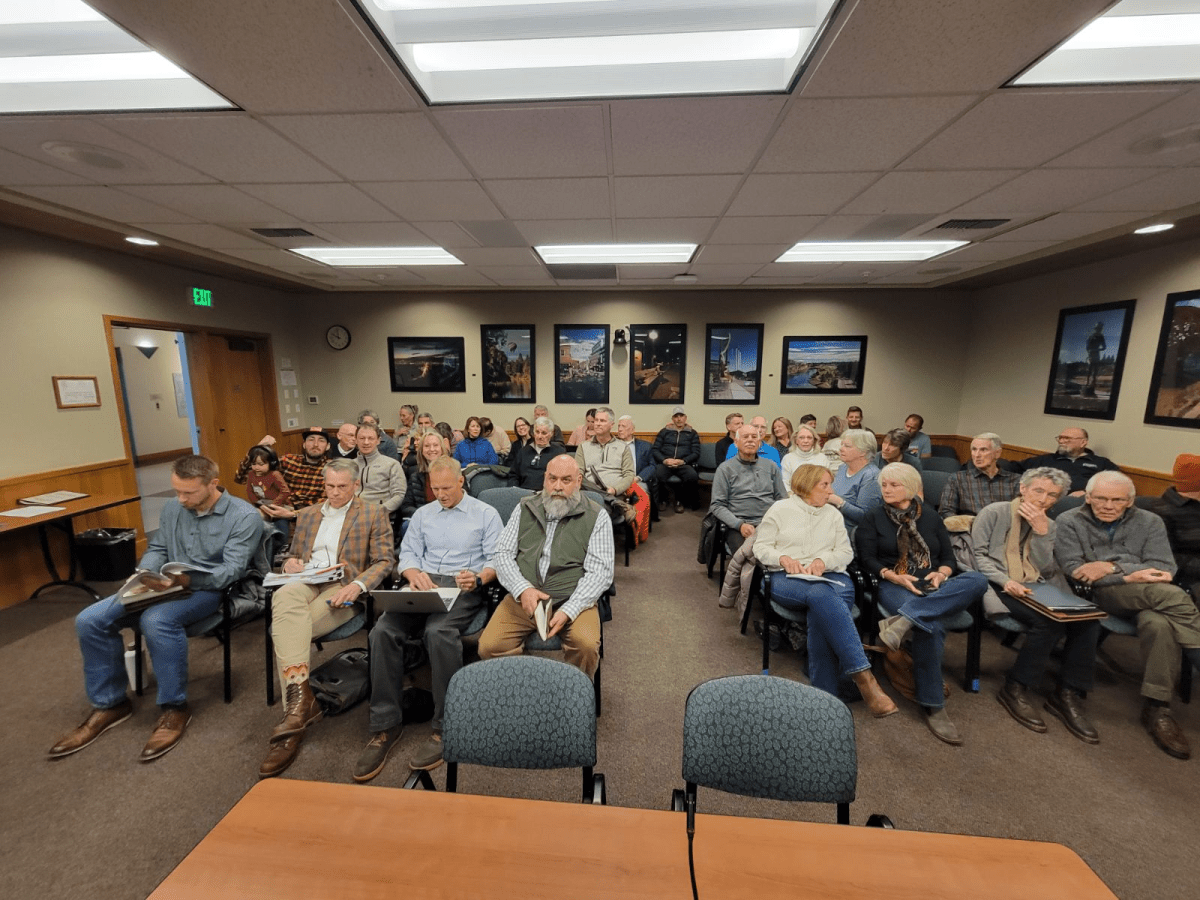
Take a look at that room. The developer’s representatives are in the front left seats. Behind them, our small YIMBY group. Everyone else is there to say “NO!” to housing.

It’s really a microcosm of “why we do not have enough housing” – and not just in Bend. The same scene plays out over and over, day in and day out across the entire country, with some local variations. Oregon is probably not as bad as other places, because we’re a bit less discretionary in terms of how these things work.

Here’s how it went, which is pretty typical:

  • The whole thing took place at 10AM on a weekday. So when we talk about “workforce housing”, the people who might actually live there can’t show up to say anything about it because, well, they’re at work.
  • The hearings officer introduces themselves and before beginning, as part of the process, asks if anyone thinks they can’t be impartial. Someone invariably asks “probing questions” implying that the hearings officer is probably best friends with the developer if not worse. But there’s never anything really relevant, so the hearing proceeds.
  • City staff has a highly technical presentation, usually indicating the project should proceed with a few tweaks here and there – otherwise, the applicant would probably ask for time to respond/correct anything and we wouldn’t be at the hearing. Only people DEEP in the weeds of land use code and law even understand much of this, and most of it is not really of much critical interest to the public. We’re not talking about safety codes like how electrical wiring must be done, but about whether a setback (the distance from the building to the street) must be one arbitrary round number or another.
  • The Applicant (aka developer) presents their project, maybe mentions a few areas where they don’t quite align with city staff for the hearings officer to decide.
  • Public comment. In favor usually goes first. It’s supposed to be about the highly technical conditions of approval, but neither the pro or con side usually has much of that, because most pro people just want to say “we need the housing!”, and the anti people “not in my back yard!”. And while the officer isn’t supposed to weigh that, they are human. A TV journalist also showed up to the hearing, and because YIMBYs were there, the story was “people speak, for, against housing” rather than simply “neighbors oppose new homes”.
  • Many of the negative comments fall into the “what about the CARS?” category. Well, maybe we could build homes for people to live in and businesses, but let’s consider the cars first and then if that works out, perhaps we could add some homes and businesses.
  • Usually the naysayers are a large, kind of loud and somewhat lacking in decorum bunch of people who can afford to show up at odd hours of the day to say ‘NO’ to housing. The stereotypical person there is a wealthy retiree. 

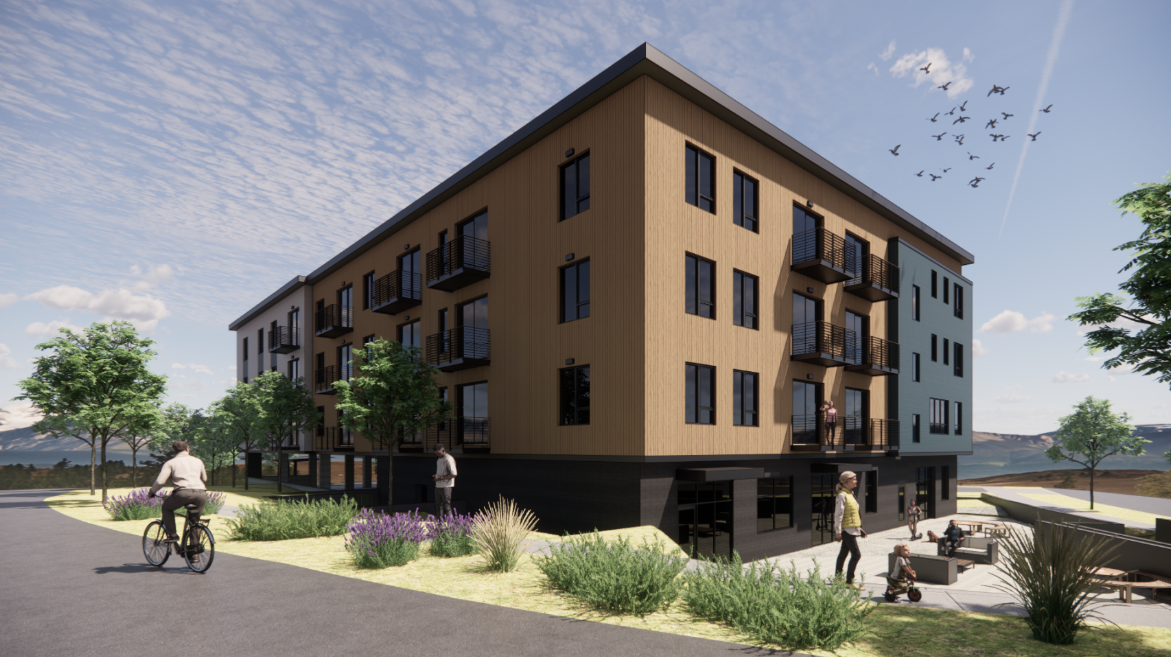
And all of this because of an apartment building that some people do not like! It’s 40 homes, and we have a deficit in Oregon of thousands and thousands, and yet we replay this same type of scene over and over again.

And at the same time the neighbors talk about the housing not actually being affordable, all these months and years of process just to build 40 homes drives the price up.

Yes, we’re talking about years:

An earlier version of this project was stopped when the neighbors discovered that it included ground-floor parking, rather than only commercial space, which was apparently the Bend city code requirement. At the very same time, they were complaining that the project did not include enough parking. In other words, they used the technicality as a cudgel, simply because they don’t want the homes to be built.

Subsequently, when a code change came before the city council that included an obscure bit about garage heights (which was relevant to this project) people turned up at the city council meeting to speak against it. Fortunately, it passed anyway, but it shows the lengths that some people will go to in order to try and stop housing. Imagine spending your evening at a city council meeting complaining about garage heights in the city code just to try and stop some homes from being built because you don’t like them.

Our job, as YIMBYs, is to flip the script:

People showing up to oppose housing is not a new narrative, but when we show up to say yes, at the very least we’re showing there’s another side to it, and that some people view building more housing as a great answer to a housing shortage. The news coverage of this hearing, rather than simply talking about the people complaining about the housing, talked about people speaking for, as well as against the homes.

Housing, Supply and Demand

Most people pretty intuitively “get” how supply and demand affect the price of automobiles or bicycles.

When new cars stopped being produced during the pandemic, the price of both new and used cars went up, because some people, unable to get ahold of a new car, opted to go looking for a used car. Enough people did that, that they bid the price of used cars up. The lack of new, relatively expensive cars translated into higher prices even for older, less appealing cars.

The same holds true for housing. Stop building new housing in the places people want to live, like Bend, and the price of “used” housing rises. The evidence from research is overwhelming at this point:

https://cayimby.org/news-events/its-only-a-housing-market-if-you-can-move-evidence-from-helsinki/ – New market rate housing kicks off “moving chains” that free up older housing stock for middle- and lower-income households. Far from just a long-term theoretical trend, data from the Helsinki Metropolitan Area shows that new housing benefits lower-income households quickly, after just a few rounds of moving. The effect is widespread throughout the region, not just in specific “submarkets” where the new housing is built.

https://cayimby.org/blog/new-housing-gentrification/ – “By running Zillow listings from 11 major cities ranging between 2013-2018, the authors found the same result in every control condition: new market-rate housing reduces rents by 5-7% relative to what they would be if the housing hadn’t been built.”

https://darrellowens.substack.com/p/berkeley-rents-fall-amid-construction – Berkeley prices are dropping as more apartments are built.

https://escholarship.org/uc/item/5d00z61m – Researchers have long known that building new market-rate housing helps stabilize housing prices at the metro area level, but until recently it hasn’t been possible to empirically determine the impact of market-rate development on buildings in their immediate vicinity.

https://furmancenter.org/thestoop/entry/supply-skepticism-revisited-research-supply-affordability – “New research shows building more homes can slow regional rent growth and free up units for residents across the spectrum of incomes”

https://www.pewtrusts.org/en/research-and-analysis/articles/2023/04/17/more-flexible-zoning-helps-contain-rising-rents – “New data from 4 jurisdictions that are allowing more housing shows
sharply slowed rent growth”

https://www.redfin.com/news/redfin-rental-report-november-2023/ – “The median U.S. asking rent fell 2% year over year in November—the biggest decline since 2020—as landlords grappled with rising vacancies due to a building boom in recent years”

https://stateline.org/2023/10/18/a-historic-housing-construction-boom-may-finally-moderate-rent-hikes/ – “An unprecedented surge in the nationwide construction of new housing — mostly apartments — may finally be making a dent in fast-rising rents that have been making life harder for tenants.”

https://oregoneconomicanalysis.com/2016/05/25/housing-does-filter/  – a slightly wonky, older article from Josh Lehner an economist with the state of Oregon – “one linchpin to the filtering process is to continuously add housing supply, particularly in popular and growing cities and regions.”

Researchers in Hawai’i tracked the “vacancy chain” of people moving into a brand new condo building, showing how that frees up more affordable options: https://uhero.hawaii.edu/wp-content/uploads/2025/11/UHEROwp2503.pdf

And in conclusion, a simplistic video from the Sightline Institute that, however, effectively illustrates how it works: https://www.youtube.com/watch?v=EQGQU0T6NBc

Strangely, it seems that a lot of people seem pretty resistant to the idea of supply and demand with regards to housing. The local paper even wrote an editorial on it:

https://www.bendbulletin.com/opinion/editorial-does-supply-and-demand-apply-to-housing-in-bend/article_9eea052c-92d6-11ee-a2fc-e3ea251a3a0b.html which cites a research paper on this subject: https://papers.ssrn.com/sol3/papers.cfm?abstract_id=4266459

Indeed, housing policy expert Jerusalem Demsas goes so far as to say that “housing breaks people’s brains”: https://www.theatlantic.com/ideas/archive/2022/11/us-housing-supply-shortage-crisis-2022/672240/

If we want to see lower rents, or at the very least, stop rents from increasing, we need to build more housing.

Bend YIMBY News

There is a lot going on in the world of housing, in Bend, Oregon and the US.

We try and reserve these blog posts for polished pieces we wish to keep around, so as an experiment, we’ve been running a Bend YIMBY News Substack here:

https://bendyimby.substack.com/

We try and update it once a week or so with local and national news about housing. You can read it on the web, or subscribe to get it via email.

The Bogeyman

The housing situation in Bend, and elsewhere, continues to be dire, causing problems for many people. They’re forced to leave because they can’t afford it. We see our friends and family move away. It’s difficult to hire people because they can’t afford to live here.

Whose fault is this? Human beings are wired for stories with “good guys and bad guys”. We want someone to blame. And it’s easier if the bad guy is an “other”, a faceless, far away person or company who we don’t know, like a Wall Street investor rather than our neighbors. If the problem is far away and not really something we can do much about, it absolves us of any responsibility.

There are some common “bogeymen” that come up in conversations about housing.

Short Term Rentals – AirBnB. Bend already places a fair amount of restrictions on these, recently increased the restrictions, and our city council produced a report showing that at the end of the day, they just don’t matter that much. (See these notes from a city council meeting where they were discussed: https://tailorglad.substack.com/p/city-council-meeting-notes-3222 )

Investors – large companies have bought up a lot of housing around the US, buying it up on the cheap during the great recession. But the reason it’s a ‘good investment’ is because there’s not enough of it. Investors don’t buy up used Toyota Corollas because they are a depreciating asset. They lose value over time. Investors want assets that gain value over time. What better asset than one where someone else will do the dirty work of ensuring there’s not enough of it? Our YIMBY group reads public comments on projects, and shows up at housing hearings in Bend. The people there to say “NO!” to housing are not from Blackrock. They’re our neighbors. This article from Jerusalem Demsas has all the numbers and details about investors and housing: https://www.theatlantic.com/ideas/archive/2023/01/housing-crisis-hedge-funds-private-equity-scapegoat/672839/ (and says it far more eloquently than I can).

Remote workers – it’s true that some people moved to Bend to work remotely, and they are generally fairly well off. Throughout most of US history, having people with a solid income move to your town would have been considered mostly a good thing. They’ll pay taxes, get involved with local schools and charities, make connections, maybe even start new businesses over time. It’s a heck of a lot better place to be in than a town where people are leaving because the freeway bypassed it or the mill shut down. As Bend’s population has increased, has food got scarce because more of us are competing for the same amount of food? Of course not! More gets trucked in. In reality, more people are good for the food scene: more restaurants open, and supermarkets can stock more niche items that would not sell in a small town.

Californians – we’ve talked about our southern neighbors before: https://bendyimby.com/2018/11/03/california/ – the problem with California is not the individuals moving here to seek a better life, but the fact that their own housing market is so broken that we feel the results here, and as far away as Idaho, Montana and Colorado.

The reality is that the problem is us. Our neighbors mobilize to try and stop housing from being built. In the past year angry neighbors managed to put a stop to around 60 homes: https://bendyimby.com/2022/09/07/development-code-weaponized-against-housing/ – and those are just the projects we know about. Who knows how many developers look at the potential for backlash and either decide to wait, scale back their projects (build fewer homes), or build more expensive homes for people with money – the kind the neighbors won’t raise a stink about.

Beyond directly opposing specific developments, the local rules that govern whether there’s “enough” housing, and for who, are often decided by those who already “got theirs” and aren’t really concerned about those who perform so many essential jobs here. Minimum lot sizes, where it’s legal to build apartments (not much of Bend), parking minimums, density rules… there are a lot of levers that our city and state control that could be moved to allow more housing. Almost everyone involved in writing those rules in the past comfortably owned their own home.

2022 Endorsements – Bend YIMBY

The Bend YIMBY group was founded because Bend needs more housing of all shapes and sizes. There needs to be enough room for everyone. Bend has a serious housing problem. Many people who work here cannot afford to live here, and the high price of housing is a primary driver of homelessness. The latest estimates suggest that Bend is short over 4000 homes compared to our current demand. You can see the effects of this shortage everywhere, from the lines of cars driving in from Redmond and beyond, to the help wanted signs in the windows of every business, to our neighbors wondering whether they’ll have a place to live in a month as their rent climbs.

This election cycle, Bend YIMBY sent out a questionnaire to every candidate running for local office to ask them their positions on housing. These responses can be found below.  After reading these responses, Bend YIMBY has selected candidates for endorsement. Not all candidates responded to the survey, and only candidates that responded have been considered.

We have tried to approach this endorsement process, our first, with a focus on housing and land use, a non-partisan lens, and an eye for the details. It’s easy to say generic things about needing to “do something” about housing, but another to discuss what the position you are running for will enable you to do.

Mayor

Melanie Kebler has shown real leadership on housing and we’re proud to endorse her. She has both the detailed policy knowledge and political skills to keep moving housing in Bend in the right direction – more of it, of all shapes and sizes. Melanie Kebler was pivotal in making Bend the first major city in Oregon to implement HB2001, a bill that re-legalized building middle housing like duplexes and triplexes in residential zones.  She helped bring new land into the city in a way that serves Bend’s housing goals, adding thousands of new homes of varying types that will be built in “complete neighborhoods”. This means that people who live in these homes will need to travel less to get the goods and services they need. She has been a strong advocate for  improving the permitting process, and continues to focus on reducing obstacles of all kinds that make housing more expensive and difficult to produce. We were especially impressed that she took the time to attend the YIMBYTown housing conference this past spring to learn about what other communities with severe housing shortages are doing to remedy the situation. 

Council Position #4

Barb Campbell has done a lot of work with the affordable housing committee, and is the chair of the Bend Urban Renewal Advisory Board, the board in charge of overseeing the development of Bend’s Core area.  As the only candidate or councilor with more than 2 years of experience, much institutional knowledge will be lost if she is not re-elected. In our survey, Barb provided concrete details about how she thinks we could improve and simplify Bend’s permitting process and speed up the development of the Core area. She is running for a two year spot, and we’re proud to support her.

It is worth mentioning that her opponent, Karon Johnson, has a track record of denying and delaying housing.

As a planning commissioner, Ms Johnson voted against apartments on the west side. Using her position on the board of a Neighborhood Association, she sought to delay and water down Bend’s implementation of HB2001 – going so far as to take out a full page ad in the paper. Her idea of using “inclusionary zoning” (forcing developers to build 20% of housing at below market rate) is one that has been tried in Portland and considered something of a failure

Council Position #5

Ariel Mendez has taken important action on affordable housing as a member of the board of Bend Parks and Recreation. He is passionate about making it safe for everyone to get around Bend safely, whether they walk, bike or drive, and understands that land use and transportation are intertwined. We love the idea, in his response to our questionnaire, about reducing the number of zones in Bend so as to simplify the system and make it easier to build more housing as well as neighborhood amenities like corner stores.

County Commission

Oliver Tatom has been an enthusiastic participant in our group and has some good ideas about what the county can do to help out with housing, like leasing land it owns long term for affordable housing and maximizing the amount of housing that gets built rather than maximizing revenue when land is sold. He deeply understands that we need more housing of all shapes and sizes.

About Bend YIMBY

Bend YIMBY is a chapter of YIMBY Action, a network of people who advocate for abundant, affordable housing and inclusive, sustainable communities across the United States. YIMBY Action is a 501(c)(4) nonprofit organization.

Questionnaire Responses

Melanie Kebler:


Barb Campbell:


Ariel Mendez


Oliver Tatom

Development Code Weaponized Against Housing

As YIMBYs, our goal is to see more homes of all shapes and sizes in Bend; enough so that people who work here can afford to live here, at a minimum. This is a commonly expressed goal of local leaders of various political leanings. 

Beyond just “enough”, I think most of us who care about Bend have some notions of what form this “enough” takes – how our city should look. What’s ‘nice to have’ so that it’s a pleasant place to live and work.

Some of these ideas have been added to our city code, with the best of intentions, but they’re being weaponized by people who think housing different from theirs should not be built in their neighborhood.

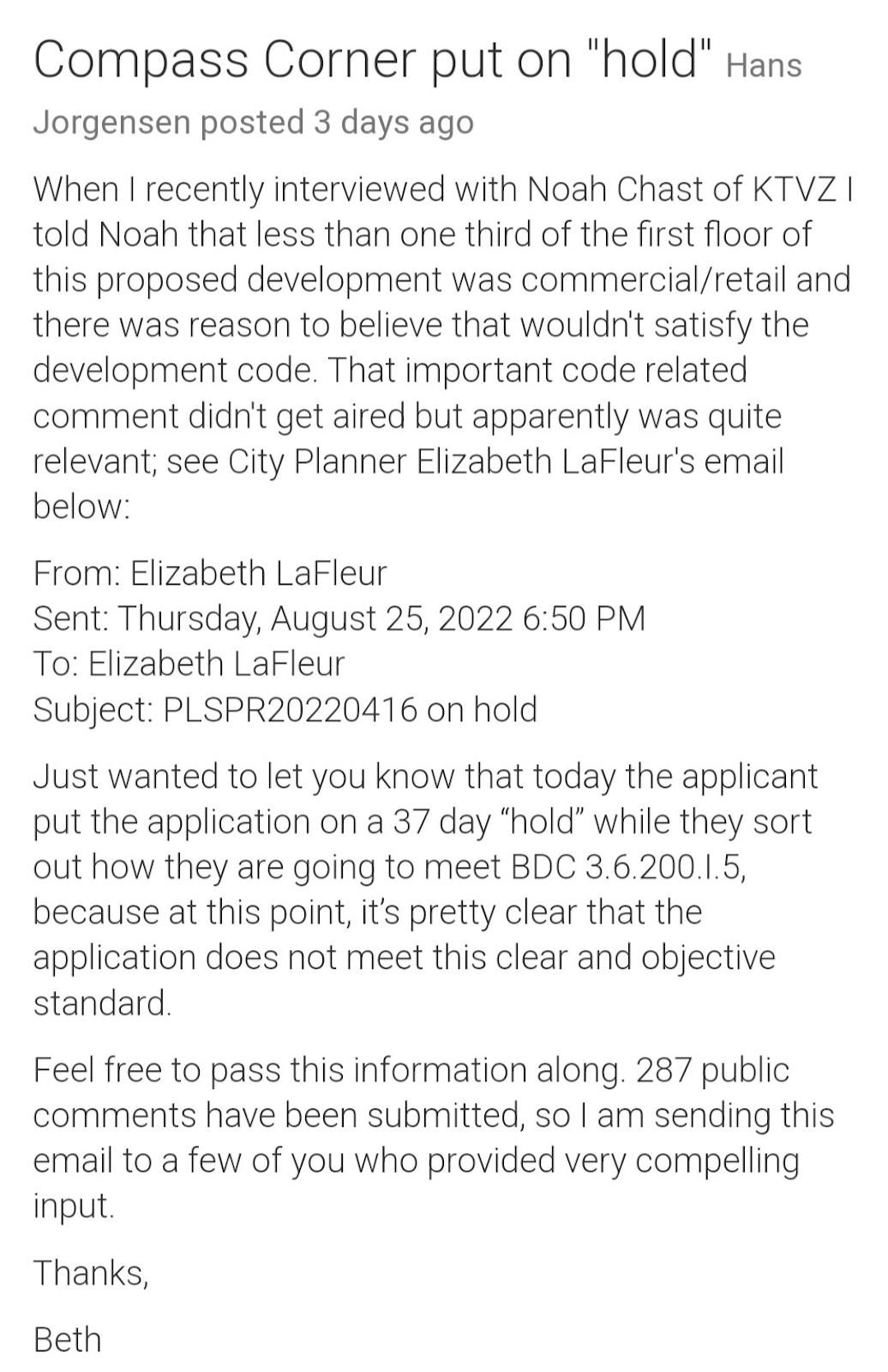
Most recently, the Compass Corner project has been delayed because the Awbrey Butte neighbors found a bit of the project that does not comply. As a “mixed use” project, code stipulates that retail must take up the entire ground floor. That sounds good, but perhaps it doesn’t make sense in all cases, as a developer might struggle with the mix of housing, parking and uncertainty about retail in today’s challenging economic climate. 

The neighbors, from their other comments on the project, pretty clearly do not care one bit whether there is a full floor of retail. It’s just a convenient way to stop the project or try to extract concessions from the developers, meaning fewer, and likely more expensive homes.

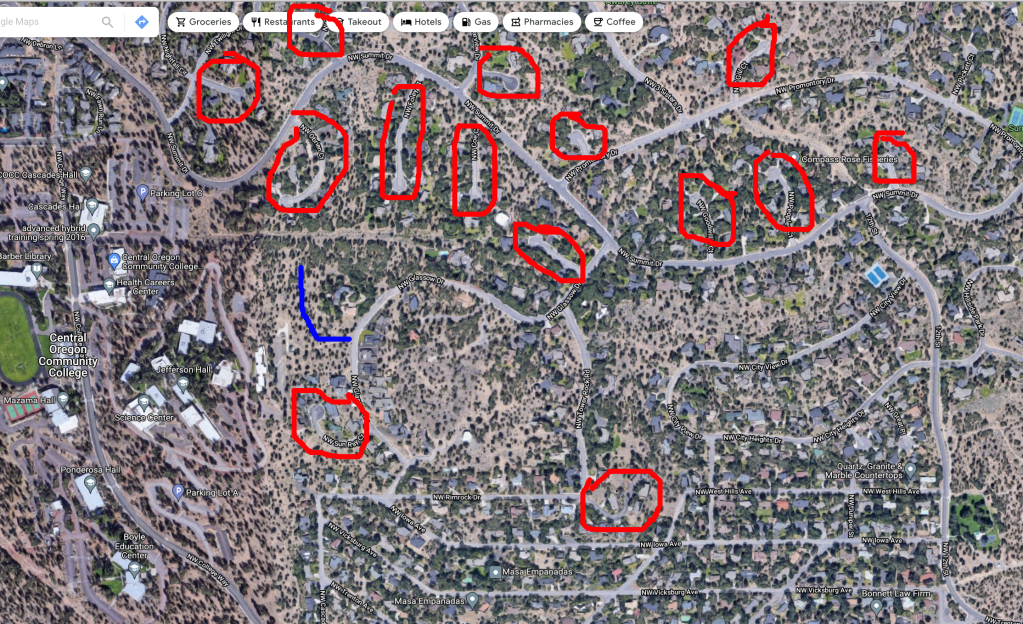
Similarly, on another part of Awbrey Butte, neighbors were very upset about some duplexes being built in their ‘exclusive’ area of town. There’s no denying it’s a wealthy part of our city – they certainly had the means to hire experts to cast around for a way to throw a monkey wrench in the project. In that case, it was the bit of Bend’s code that requires streets to be connected. A connected street network is a laudable goal – a street grid is better in a lot of ways – but looking at how many cul-de-sacs there are already in that area, and the terrain… it’s abundantly clear the neighbors care nothing for well-connected neighborhoods, and mostly about having as few new neighbors as possible. They were partially successful in that the developer halved the number of homes to be built, roughly. 

We’ve heard a lot of nice words about ‘equity’ in Bend, but what it looks like to us, is that those with the time and financial resources can afford to scour a project for some technical ‘fault’ that no one actually cares about, and utilize that to throw sand in the gears, leading to less housing in their part of town.

There are fairly straightforward solutions to single code problems. Kathy Austin, a local architect and expert on affordable housing, suggests that ground floors be built to be compatible with future retail uses, rather than requiring retail on 100% of the floor, for instance.

However, looking at the problem at a higher level, perhaps we would be wise to be less detailed and prescriptive in some portions of our development code (outside of safety issues), allowing buildings, neighborhoods and our city to build quickly, and then adapt over time. What we’re seeing now are good ideas being used to undermine a stated goal of nearly everyone elected in Bend in recent years.